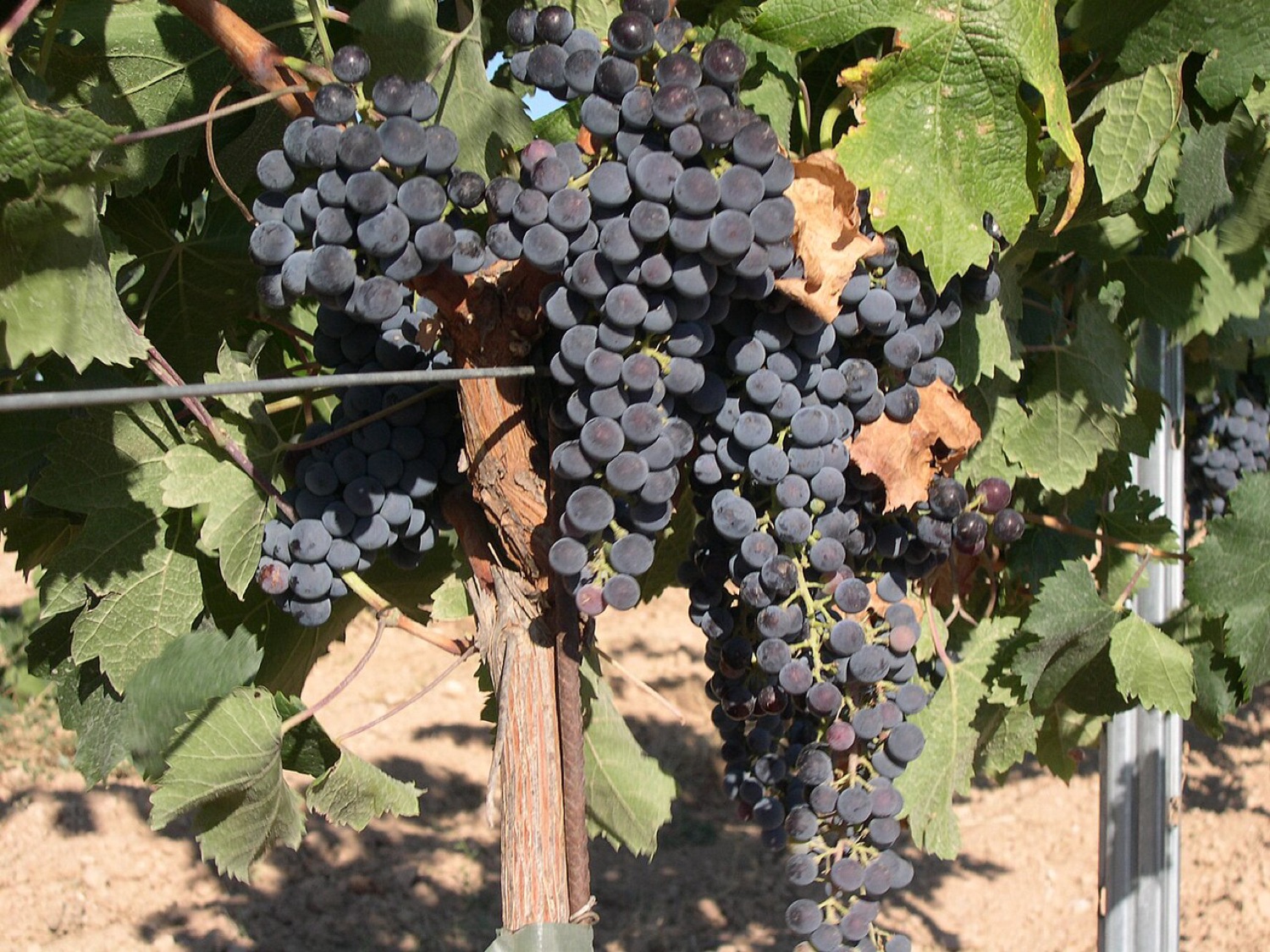
Merlot as a Blending Grape: Napa's Quiet Partner
September 16, 2026
On many Napa estates, Merlot is the grape that rarely appears on the front label but quietly shapes the wine inside. A half-acre block planted alongside the Cabernet, used purely for blending, is one of the most common sights on the valley's mountain vineyards.
What Merlot brings to a blend
Merlot and Cabernet Sauvignon are partners in Bordeaux, where Merlot dominates on the right bank in Pomerol and Saint-Émilion and plays the supporting role on the left bank in the Médoc. Merlot ripens earlier than Cabernet, has thinner skins and gives softer tannins and a fleshier mid-palate. Added at five to fifteen percent, it rounds out the angular edges of a young Cabernet and fills the "hole" in the middle that Cabernet sometimes leaves. A wine labelled Cabernet Sauvignon in the United States can contain up to 25 percent of other grapes, and Merlot is the most common choice.
Merlot vs Cabernet Sauvignon
- Ripening
- Merlot about one to two weeks earlier
- Berries
- Merlot larger, thinner-skinned
- Tannin
- Merlot softer, rounder
- Typical role in Napa
- Blending partner, 5–20 percent of a Cabernet-based wine
- Flavours
- Plum, black cherry, chocolate, sometimes bay leaf
The Sideways effect
In 2004 the film Sideways turned Merlot into a punchline: its wine-snob hero loudly refuses to drink it. Sales of varietal Merlot in the United States slowed noticeably in the following years, while Pinot Noir, the hero's favourite, boomed. The joke had a twist that wine lovers enjoyed: the treasured bottle he saves for a special occasion is a 1961 Cheval Blanc, a Saint-Émilion made largely from Cabernet Franc and Merlot. For blending growers the film mattered less, because Merlot's value as a component never depended on its name on a label.
Blending as hedging
Professional bettors spread risk by hedging: placing a second bet that pays off if the first one fails. A vineyard planted to two or three varieties that ripen at different times does something similar. If an early autumn storm arrives before the Cabernet is ripe, the Merlot is usually already picked; if a heat spike cooks the early grapes, the later Cabernet may escape. At blending time the winemaker can then adjust the proportions to make the best wine the vintage allows. It is the same logic as diversifying across several outcomes rather than putting the whole bankroll on one number at the roulette wheel. For a closer look at how wine buyers hedge, see wine auctions and the gamble of buying futures, and for the odds of a vintage itself, vintage charts explained.
Merlot on its own
Napa does make excellent varietal Merlot, especially from cooler sites such as Carneros and from hillsides where the grape keeps its freshness. Try one with roast chicken, mushrooms or duck, as suggested in our pairing guide, and compare it with a Napa Cabernet from the same producer to see what each grape brings.